Few joinery techniques capture the essence of fine woodworking quite like the dovetail. This elegant joint has been used for centuries to create strong, beautiful connections between drawer sides and fronts. Beyond its functional benefits—mechanical resistance to pulling forces and self-locating alignment—the dovetail is a hallmark of craftsmanship that signals quality furniture to anyone who knows what to look for.
Understanding Dovetail Joints
A dovetail joint consists of two interlocking pieces: the pins, cut into one board, and the tails, cut into the matching board. The characteristic trapezoidal shape of dovetail pins and tails creates a mechanical lock that prevents separation under pulling stress while allowing for the seasonal wood movement that all woodworkers must account for.
Dovetails come in several variations. Through dovetails expose the joint on both surfaces, making them visible and often a decorative element. Half-blind dovetails hide one side of the joint, perfect for drawer fronts where you want a clean appearance. Sliding dovetails offer another option for certain applications, particularly when joining cabinet carcases.
Choosing Your Dovetail Angle
The angle of your dovetails affects both appearance and strength. Steeper angles (around 1:8 or 1:10) create a more refined look and are traditional for fine furniture. Shallower angles (1:6 or 1:5) are stronger but appear more utilitarian. For most hardwood drawer construction, a 1:8 ratio provides an excellent balance of aesthetics and holding power.
Softwoods like pine typically use even steeper angles (1:10 or 1:12) because the softer material holds together well and the finer joint looks more appropriate for the typically painted finish. Hardwoods can handle the more dramatic angle of a 1:6 or 1:8 ratio.
Essential Tools
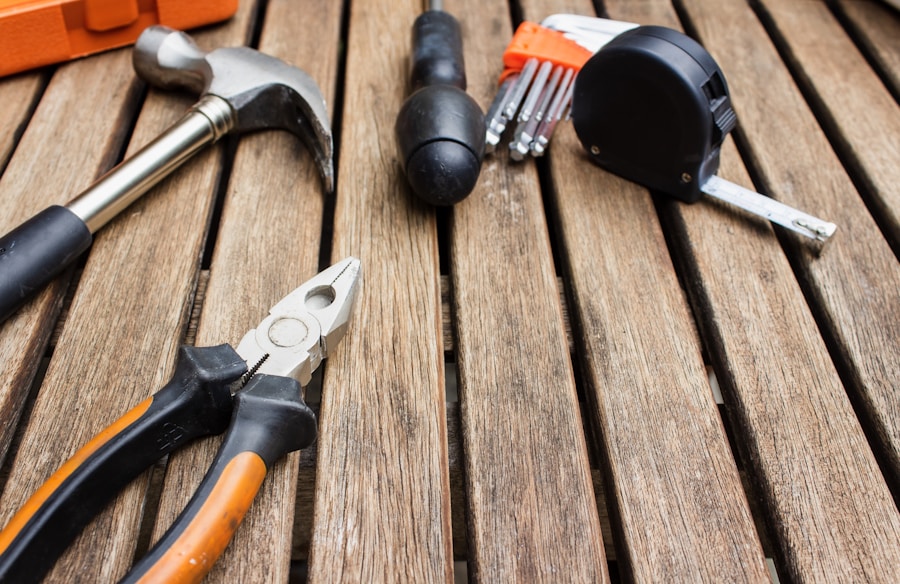
While hand-cut dovetails are the traditional approach, many woodworkers use a combination of hand and power tools. Here's what you'll need:
- Dovetail saw: A fine-toothed backsaw with a stiff blade for precise cuts
- Marking gauge: For laying out consistent baseline markings
- Combination square: General marking and measurement tasks
- Chisels: Sharp bench chisels for removing waste and fitting the joint
- Dovetail marker: Specialized marking gauge for consistent angles
- Coping saw: For removing waste between pins
- Mallet: For driving chisels when needed
💡 Pro Tip: Sharpness is Everything
Dovetail work demands sharp tools. A dull chisel will crush wood fibers rather than cut them, ruining your joint. Take time to hone your chisels and saw teeth before attempting dovetail work. The extra time invested will show in the quality of your joints.
Step-by-Step Process
- Mill your stock: Start with flat, square stock. Mill your drawer side and front pieces to final thickness and width, leaving them slightly long. For a typical drawer, cut sides 1/2" deeper than the opening and fronts 1/4" wider.
- Mark the baseline: Use a marking gauge to scribe a line on both pieces at the thickness of the bottom groove. This line marks where the dovetails will start and establishes the socket depth.
- Mark the tail locations: On your side pieces, mark where the center of each tail will fall. Traditional practice places tails at the corners with equal spacing between them.
- Cut the tails: Clamp your tail board vertically and carefully cut along your marked lines. Cut just to the baseline line—it's better to stay proud and trim later than to cut too deep.
- Transfer the marks: Use the cut tails as a template to mark the pin boards. Trace around each tail carefully with a sharp pencil.
- Cut the pins: Cut along the outside of your pencil lines on the pin board. Remove the waste between pins using a coping saw, then refine with chisels.
- Test fit: Begin with a test fit. The joint should require light mallet taps to close fully. Mark any high spots and trim them with your chisels.
- Final assembly: Once satisfied with the fit, apply glue to the mating surfaces and assemble the joint. Use clamps or a mallet to close the joint fully.
Troubleshooting Common Issues
Even experienced woodworkers encounter dovetail challenges. Here are solutions to frequent problems:
Gaps in the Joint
Gaps usually indicate either cutting slightly outside your lines or having inconsistent baseline depth. For minor gaps, a thin shim of wood can be glued in place. For larger issues, you may need to recut the offending pins or tails.
Joint Won't Close Fully
If the joint doesn't seat completely, check for three issues: baseline depth inconsistency between pieces, tails cut at a steeper angle than pins, or pin waste not fully removed. Address each systematically until the problem is found.
Splitting During Assembly
Never force a joint that doesn't fit. If it requires significant pressure, something is wrong. Forcing can split the delicate end grain. Instead, identify and correct the fit issue.
Machine-Cut Dovetails
While hand-cut dovetails are considered the pinnacle of the craft, many professional shops use dovetail jigs and routers to produce consistent, strong joints quickly. The Leigh Digmaster, Porter Cable 4116, and Trend T-Cuide are all excellent systems that can produce beautiful dovetails with practice.
Machine-cut dovetails can be just as strong as hand-cut and are perfectly acceptable for production furniture. The key is consistent setup and sharp bits. Many customers cannot distinguish between hand and machine-cut dovetails, and what's important is that your joints are properly fitted and strong.
Practice Projects
Before cutting dovetails on a finished project, practice on scrap wood. Build several small boxes or sample joints using the same species you'll use in your project. This practice will reveal any technique issues before they ruin expensive lumber.
Start with through dovetails— they're easier because you can see your layout lines throughout the process. Once comfortable, move to half-blind dovetails, which require more careful marking since one side is hidden.
Conclusion
Dovetail joinery requires patience and practice, but the results are deeply satisfying. Each joint you cut improves your eye for layout and your hand's ability to follow lines accurately. Start with simple projects and gradually challenge yourself with more complex work. Within a few projects, you'll be cutting clean, tight dovetails that will last generations.